 contact@scottishbeautyexpert.com

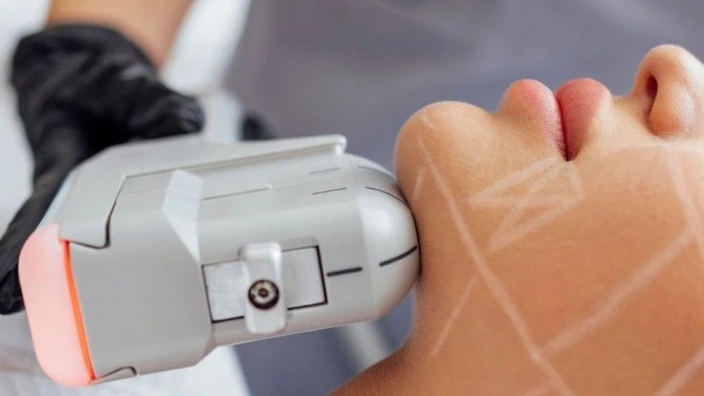
HIFU, also known as High-Intensity Focused Ultrasound, is a non-surgical facial treatment designed to target deeper layers of the skin using focused ultrasound energy. It is commonly chosen by clients who want to improve the appearance of skin laxity, facial contours, fine lines, and early signs of ageing.
For beauty clinics, aesthetic practitioners, and advanced skincare professionals, HIFU is also a commercially valuable treatment because it sits within the growing market for non-invasive skin tightening and anti-ageing facial services.
HIFU Facial
A HIFU facial is a non-invasive skin tightening treatment that uses focused ultrasound energy to target specific depths beneath the surface of the skin. Unlike a standard facial that works mainly on the surface, HIFU is designed to reach deeper structural layers where collagen support is important.
The treatment is often used to encourage a firmer and more lifted-looking appearance over time. It does not involve cuts, needles, or surgical lifting. Instead, the device delivers controlled ultrasound energy into targeted areas of the face and neck.
A HIFU facial may be used on areas such as:
- Jawline
- Cheeks
- Chin
- Neck
- Brow area
- Forehead
- Around the mouth
- Lower face
- Décolletage, depending on treatment plan
Many clients choose HIFU because they want natural-looking improvement rather than a dramatic or artificial change. It is often positioned as a treatment for those who want to support skin firmness and facial definition without surgery.
Why Is HIFU Facial Treatment So Popular?
The popularity of HIFU facial treatment comes from the growing demand for non-surgical beauty solutions. Clients are now more informed about anti-ageing treatments and are actively searching for options that fit into busy lifestyles.
A HIFU facial appeals to clients because it may help with:
- Firmer-looking skin
- A more lifted facial appearance
- Improved jawline definition
- Reduced appearance of mild skin laxity
- Smoother-looking facial contours
- A refreshed, more youthful appearance
- Minimal disruption compared with surgical procedures
For many clients, the main attraction is that HIFU is not a traditional facial and not surgery. It sits between skincare and advanced aesthetics, which makes it attractive for people who want visible treatment value without choosing more invasive options.
How Does a HIFU Facial Work?
A HIFU facial works by delivering focused ultrasound energy into selected layers of the skin. This energy creates controlled heating at specific depths. The aim is to stimulate the body’s natural collagen response.
Collagen is one of the key proteins responsible for keeping skin firm, supported, and elastic. As people age, collagen production naturally slows down, which can contribute to sagging, fine lines, and loss of definition.
HIFU treatment is designed to encourage the skin’s natural renewal process. Results are not usually instant in the same way as makeup or a surface facial glow. Instead, clients may notice gradual changes over the following weeks as the skin responds.
This makes client education important. A professional practitioner should explain that HIFU is a progressive treatment and that results can vary depending on age, skin condition, lifestyle, treatment area, and individual response.
HIFU Facial for Skin Tightening
One of the main reasons clients book a HIFU facial for skin tightening is to improve the appearance of loose or ageing skin. The treatment is often chosen by people who are starting to notice changes in facial firmness but are not ready for surgical procedures.
Common concerns may include:
- Softening around the jawline
- Mild jowls
- Looser skin under the chin
- Reduced cheek firmness
- Fine lines around the lower face
- Loss of facial definition
- Early signs of skin ageing
HIFU is not a replacement for surgery, and it should not be marketed as a facelift. However, it can be a strong option for clients who want a non-surgical approach to facial lifting and tightening.
HIFU Facial for Jawline and Lower Face Definition
The jawline is one of the most popular areas for HIFU treatment. Many clients feel that the lower face is one of the first areas where ageing becomes noticeable.
A HIFU facial for jawline definition may help improve the appearance of:
- Mild sagging around the jawline
- Soft facial contours
- Early jowl formation
- Loss of lower-face structure
- Skin laxity under the chin
This makes the treatment especially appealing to clients who want a sharper, more defined, or more lifted appearance without surgical intervention.
For practitioners and clinics, jawline-focused HIFU treatments can also be easy to position commercially because the concern is common, visible, and highly searched.
Who Is a HIFU Facial Suitable For?
A HIFU facial may be suitable for clients who are concerned about mild to moderate skin laxity and want a non-invasive treatment option.
It may appeal to people who:
- Want firmer-looking skin
- Are noticing early signs of ageing
- Want a non-surgical lifting treatment
- Prefer treatments with minimal downtime
- Want to improve facial definition
- Are not ready for injectable or surgical treatments
- Want gradual, natural-looking improvement
However, HIFU is not suitable for everyone. A proper consultation is essential before treatment. The practitioner should assess the client’s skin, medical history, expectations, contraindications, and suitability.
Clients with certain medical conditions, active skin infections, implanted devices, pregnancy, or other contraindications may not be suitable. This is why professional training and careful client screening are important.
What Happens During a HIFU Facial Treatment?
A professional HIFU facial should follow a structured treatment process. The exact steps may vary depending on the device, treatment area, and clinic protocol, but the treatment generally includes consultation, preparation, treatment delivery, and aftercare.
Client Consultation
The treatment should begin with a detailed consultation. The practitioner should discuss the client’s concerns, goals, medical background, previous treatments, and expectations.
This is also the stage where the practitioner explains what HIFU can and cannot do. Clear communication is important because HIFU results are gradual and vary from person to person.
Skin Assessment
The practitioner assesses the client’s skin quality, laxity, treatment areas, and suitability. This helps determine whether HIFU is the right option or whether another treatment may be more suitable.
Cleansing and Preparation
The skin is usually cleansed before treatment. The practitioner may mark treatment areas depending on the protocol being used.
Application of Ultrasound Gel
Ultrasound gel is applied to help the device glide smoothly and support energy delivery.
HIFU Treatment Delivery
The practitioner uses the HIFU handpiece to deliver focused ultrasound energy into the selected treatment areas. Clients may feel warmth, tingling, or brief discomfort during the process.
Aftercare Advice
After the treatment, the client should receive clear aftercare instructions. This may include avoiding excessive heat, strong exfoliation, active skincare, or certain treatments for a short period, depending on the practitioner’s guidance.
Does a HIFU Facial Hurt?
The sensation of a HIFU facial can vary. Some clients describe it as warmth, prickling, tingling, or a sharp sensation in certain areas. The intensity can depend on the treatment area, device settings, skin sensitivity, and individual pain threshold.
Areas close to bone, such as the jawline or forehead, may feel more intense for some clients.
A professional practitioner should keep the client informed throughout the treatment and adjust their approach where appropriate. Good communication helps the client feel more comfortable and reassured.
How Long Do HIFU Facial Results Take to Show?
HIFU facial results are usually gradual. Some clients may notice a slight immediate tightening effect, but the more meaningful changes often develop over several weeks.
This is because the treatment works by supporting the skin’s natural collagen response. Collagen renewal takes time, so clients should understand that HIFU is not an instant transformation treatment.
Many clients may notice improvement over a period of weeks to months, depending on their skin condition and individual response.
This is why consultation and expectation management are essential. A good practitioner should explain the treatment timeline clearly before the client books.
Benefits of HIFU Facial Treatment
A HIFU facial can offer several benefits for suitable clients.
Non-Surgical Treatment
HIFU does not involve incisions or surgical lifting. This makes it attractive for clients who want a non-invasive option.
Minimal Downtime
Many clients return to normal daily activities after treatment, depending on their skin response and practitioner advice.
Supports Firmer-Looking Skin
The treatment is designed to target skin laxity and support a firmer, more lifted appearance.
Popular for Face and Neck
HIFU can be used on several areas where clients commonly notice ageing, including the jawline, cheeks, chin, and neck.
Natural-Looking Improvement
Because results develop gradually, the treatment can appeal to clients who want subtle, natural-looking changes.
Strong Commercial Appeal
For clinics and advanced beauty practitioners, HIFU can be a high-value treatment that attracts clients looking for non-surgical anti-ageing solutions.
HIFU Facial vs Regular Facial
A regular facial and a HIFU facial are very different treatments.
A regular facial usually works on the surface of the skin. It may include cleansing, exfoliation, massage, mask application, hydration, and relaxation. It is useful for skin maintenance, glow, and client wellbeing.
A HIFU facial is more advanced. It uses focused ultrasound energy to target deeper layers of the skin and is usually chosen for lifting, firming, and skin tightening goals.
Both treatments can be valuable, but they serve different purposes.
| Treatment Type | Main Purpose |
|---|---|
| Regular Facial | Cleansing, hydration, relaxation, skin maintenance |
| HIFU Facial | Skin tightening, lifting, facial contour support |
| Regular Facial | Usually surface-focused |
| HIFU Facial | Targets deeper skin layers |
| Regular Facial | Often repeated monthly |
| HIFU Facial | Usually performed less frequently depending on treatment plan |
HIFU Facial Training for Beauty Professionals
For beauty therapists and aesthetic practitioners, HIFU facial training can be a strong way to move into advanced skincare and non-surgical aesthetics.
Training is important because HIFU is a device-led treatment. Practitioners need to understand the technology, treatment depths, contraindications, consultation process, client safety, device handling, and aftercare.
A professional HIFU course may cover:
- HIFU theory
- Skin ageing and collagen
- Client consultation
- Contraindications
- Treatment planning
- Facial anatomy basics
- Device safety
- Practical application
- Aftercare guidance
- Managing expectations
This is not a treatment that should be performed without proper training. Client safety, correct technique, and professional judgment are essential.
Why Add HIFU Facial to Your Treatment Menu?
Adding HIFU to a treatment menu can help beauty professionals offer a more advanced service to clients who want visible anti-ageing support.
HIFU can be commercially valuable because:
- It is a high-demand non-surgical treatment
- Clients actively search for skin tightening options
- It can be positioned as a premium facial service
- It supports advanced skincare business growth
- It attracts clients interested in anti-ageing treatments
- It can complement other facial and skincare services
For salons, clinics, and freelance practitioners, HIFU can help create a more premium treatment offering.
It can also work well alongside treatments such as advanced facials, LED therapy, microneedling, skin peels, dermaplaning, and radiofrequency, depending on professional training and treatment suitability.
HIFU Facial in Glasgow
A HIFU facial in Glasgow can appeal to clients looking for non-surgical skin tightening, facial lifting, and advanced anti-ageing treatments. Glasgow has a strong beauty and aesthetics market, with clients often searching for treatments that deliver visible value.
For practitioners, offering HIFU in Glasgow can help position a salon or clinic within the advanced skincare sector. The treatment can attract clients who are moving beyond basic facials and looking for more targeted results.
Because competition can be strong, professional training, clear consultation, safe treatment delivery, and honest marketing are essential.
Is HIFU Facial Worth It?
For suitable clients, a HIFU facial can be worth considering if they want a non-surgical treatment for firmer-looking skin and improved facial definition. It is especially attractive for clients who want gradual results without choosing surgery or injectables.
However, results vary. HIFU is not suitable for every skin concern, and it should not be presented as a guaranteed facelift alternative. The best outcomes usually come from proper client selection, realistic expectations, skilled treatment delivery, and good aftercare.
For practitioners, HIFU can also be worth adding to a treatment menu because it is a high-value service with strong client interest in the anti-ageing and skin tightening market.
Final Thoughts
A HIFU facial is one of the most popular non-surgical treatments for clients who want firmer, more lifted, and more defined-looking skin. It offers an advanced option for people who are not ready for surgery but still want a treatment focused on skin tightening and facial contour support.
For clients, HIFU can provide a modern approach to facial rejuvenation. For beauty professionals, it can create an opportunity to offer a premium, results-focused treatment within the advanced skincare market.
Whether someone is searching for a HIFU facial in Glasgow, a HIFU facial in Aberdeen, or professional HIFU facial training, the key is choosing safe, well-trained, and knowledgeable practitioners who understand both the technology and the client journey.
Final Thoughts
What is a HIFU facial?
A HIFU facial is a non-surgical skin tightening treatment that uses focused ultrasound energy to target deeper layers of the skin and support a firmer, more lifted-looking appearance.
Is HIFU facial good for skin tightening?
Yes, HIFU is commonly used for skin tightening, especially around areas such as the jawline, cheeks, chin, neck, and lower face.
How long does it take to see HIFU results?
Some clients may notice mild tightening sooner, but results usually develop gradually over several weeks as the skin responds naturally.
Is HIFU facial painful?
The sensation varies. Some clients feel warmth, tingling, prickling, or brief discomfort during treatment, especially near bony areas.
Is there downtime after a HIFU facial?
HIFU usually has minimal downtime, but some clients may experience temporary redness, tenderness, or sensitivity.
Who is suitable for HIFU facial treatment?
HIFU may suit clients with mild to moderate skin laxity who want a non-surgical lifting and firming treatment. A consultation is required to confirm suitability.
Can HIFU replace a facelift?
No. HIFU should not be described as a replacement for surgery. It is a non-surgical treatment that may support lifting and tightening for suitable clients.
Can beauty professionals train in HIFU?
Yes. Beauty therapists and aesthetic practitioners can take professional HIFU training to learn treatment theory, consultation, safety, device use, and practical application.