contact@scottishbeautyexpert.com

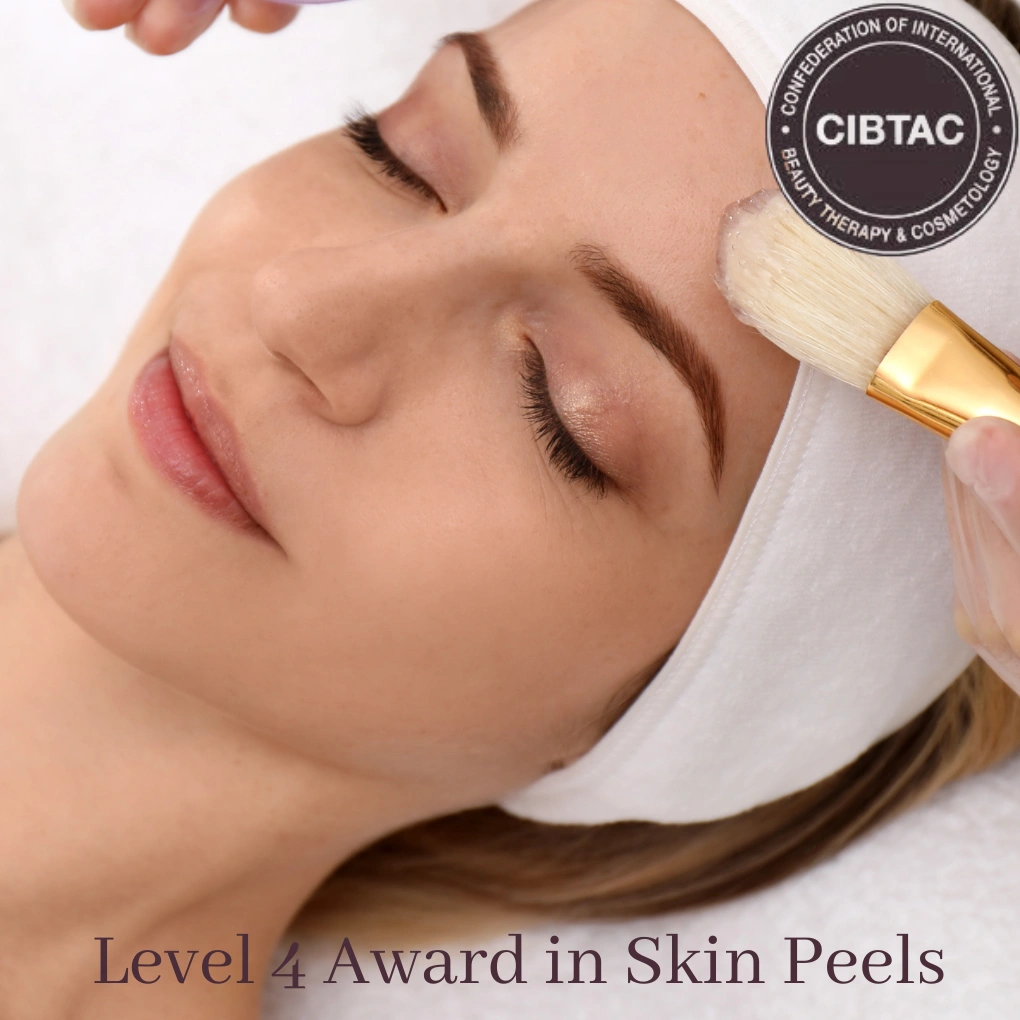
CIBTAC Level 4 Award in Skin Peeling
The CIBTAC Level 4 Award in Skin Peeling is designed for therapists who already hold a Level 3 beauty qualification and want to progress into advanced skin treatments.
The course covers professional superficial chemical peels, including client consultation, skin analysis, peel selection, safe application, treatment timing, neutralisation and aftercare.
If you do not currently hold a Level 3 beauty qualification, you must first complete the Level 3 Principles in Cosmetic Practice before enrolling.
CIBTAC Skin Peeling Course Details
Entry Requirement: A Level 3 beauty qualification or successful completion of the Level 3 Principles in Cosmetic Practice.
Qualification Evidence: Evidence of your existing qualification must be provided.
Qualification: CIBTAC Level 4 Award in Skin Peeling.
Course Duration: Three in-person training days, an at-home portfolio and a return visit for final examinations and assessments.
Total Completion Period: The qualification takes approximately 12 weeks to complete and includes home study.
Course Price: £1,600.
Course Kit: No take-home kit is included. All professional products and equipment required during training are provided by the academy.
Examination Fees: Required examination fees are included in the course price. Changes to scheduled examinations or requests for alternative sittings may incur additional fees.
What Is Chemical Skin Peeling?
Chemical skin peeling involves applying a controlled chemical solution to exfoliate the outer layers of the skin.
Superficial peels are designed to support cell renewal and may improve the visible appearance of:
- Uneven-looking skin texture
- Dull-looking skin
- Uneven-looking skin tone
- Fine lines
- Congested-looking skin
- Reduced skin clarity
Treatment suitability, skin response, recovery and results vary between clients.
Types of Superficial Skin Peels
The course introduces different categories of superficial chemical peels.
You will learn about:
- Alpha hydroxy acids
- Beta hydroxy acids
- Polyhydroxy acids
- Product strengths
- Product indications
- Application methods
- Treatment timings
- Neutralisation requirements
- Product-removal procedures
Each peel must be used according to its manufacturer’s instructions, professional protocol and the client’s individual treatment plan.
What You Will Learn
- Principles of chemical skin peeling
- Relevant skin Anatomy and Physiology
- Health, safety and hygiene
- Infection-control procedures
- Client consultation
- Skin analysis
- Client suitability
- Indications and contraindications
- Different types of superficial peels
- Product selection
- Treatment planning
- Treatment adaptations
- Step-by-step peel protocols
- Application techniques
- Safe treatment timings
- Neutralisation where required
- Safe product removal
- Managing skin responses
- Managing client expectations
- Homecare and aftercare
Skin Anatomy and Exfoliation
A clear understanding of skin structure is required before selecting or applying a chemical peel.
You will study the areas of Anatomy and Physiology relevant to superficial exfoliation, including:
- The structure of the skin
- The functions of the skin
- The skin-renewal process
- Different skin types
- Visible skin conditions
- How the skin may respond to exfoliation
- Factors that may affect treatment suitability
Client Consultation and Skin Analysis
A detailed consultation and skin analysis must take place before every chemical peel.
You will learn how to review:
- The client’s treatment goals
- Current skin concerns
- Skin type and visible condition
- Relevant medical information
- Medication
- Allergies and sensitivities
- Current skincare products
- Previous skin treatments
- Previous reactions
- Contraindications
- Expected treatment results
- Consent and treatment records
The consultation helps determine whether the client is suitable or whether treatment should be adapted, delayed or declined.
Product Selection and Treatment Planning
Chemical peel treatments must be planned according to the individual client rather than delivered using one standard product or protocol.
You will learn how to consider:
- The client’s skin type
- The visible skin concern
- Previous peel experience
- Current skincare use
- Product type and strength
- Application time
- Whether neutralisation is required
- The skin’s response during treatment
- Suitable aftercare
Step-by-Step Skin Peel Procedure
The practical training covers the complete professional treatment process.
You will learn how to:
- Prepare the treatment area
- Complete consultation and consent records
- Analyse the client’s skin
- Select an appropriate peel
- Prepare the skin
- Protect sensitive areas
- Apply the peel evenly
- Follow the correct treatment time
- Monitor the skin response
- Neutralise the peel where required
- Remove the product safely
- Apply suitable post-treatment products
- Record the products and timings used
- Provide homecare and aftercare advice
Health, Safety and Hygiene
Professional health, safety and hygiene procedures are required when carrying out chemical skin peels.
The course covers:
- Preparing a hygienic treatment environment
- Hand hygiene
- Personal protective equipment
- Preventing cross-contamination
- Safe product handling
- Safe product storage
- Protecting sensitive treatment areas
- Cleaning equipment and surfaces
- Disposing of treatment waste
- Maintaining accurate treatment records
Contraindications and Skin Responses
Chemical skin peeling is not suitable for every client.
You will learn how to identify factors that may require treatment to be:
- Adapted
- Delayed
- Declined
- Approved by an appropriate medical professional
You will also learn how to monitor the skin during treatment and recognise when a peel should be removed or neutralised.
Clients must be informed about expected treatment responses, possible side effects and when they should seek further professional or medical advice.
Skin Peel Aftercare
Clients must receive clear aftercare instructions following a chemical peel.
You will learn how to explain:
- Expected short-term skin responses
- How to care for the skin after treatment
- Which skincare products may be suitable
- Which products should temporarily be avoided
- Why further exfoliation should be avoided during recovery
- Sun-protection requirements
- When normal skincare may be resumed
- When another peel may be considered
- When the client should seek further advice
Aftercare should be provided verbally and in writing.
Course Delivery and Assessments
The qualification includes three in-person practical training days, home-study portfolio work and a return visit for final examinations and assessments.
The complete programme takes approximately 12 weeks to complete.
Assessment requirements include:
- At-home portfolio work
- Theory study
- Practical training
- Practical assessment
- Final examination requirements
All required portfolio work, examinations and practical assessments must be completed successfully before the qualification can be awarded.
Products, Equipment and Models
No take-home kit is included with the course.
All professional peel products and equipment required during practical training are provided by the academy.
Models are usually provided. Students may also work on one another where appropriate and suitable.
Model arrangements may depend on the practical training and assessment schedule.
Who Is This Course For?
The CIBTAC Level 4 Award in Skin Peeling is suitable for:
- Therapists with a Level 3 beauty qualification
- Learners who have completed Level 3 Principles in Cosmetic Practice
- Facial therapists progressing into advanced treatments
- Skincare professionals expanding their treatment menu
- Therapists seeking a formal Level 4 qualification
- Professionals developing an aesthetics business
This is an advanced qualification and is not suitable for learners who have not met the Level 3 entry requirement.
Entry Requirements
You must hold one of the following:
- A Level 3 beauty qualification
- Level 3 Principles in Cosmetic Practice
Evidence of your qualification must be provided.
Learners without a suitable Level 3 qualification must first complete Level 3 Principles in Cosmetic Practice before progressing to this course.
Career Opportunities
After successful completion, the qualification may support progression into professional advanced skin services.
Possible routes include:
- Working as an advanced skin therapist
- Working within a skin or aesthetics clinic
- Adding superficial skin peels to an existing treatment menu
- Developing an independent aesthetics business
- Offering professional skin-resurfacing treatments
You must arrange suitable professional insurance and meet any applicable licensing, premises, product and equipment requirements before offering treatments.
Qualification, Price and Examination Fees
Qualification: CIBTAC Level 4 Award in Skin Peeling.
Course Price: £1,600.
Course Duration: Three in-person training days, at-home portfolio work and a return visit for final examinations and assessments.
Total Completion Period: Approximately 12 weeks, including home study.
Examination Fees: Required examination fees are included within the course price.
Changes to scheduled examination dates or requests for alternative examination sittings may incur additional fees.
Insurance Requirements
It is the learner’s responsibility to confirm that they hold the prerequisite qualifications required by their chosen professional insurer.
You should check the insurer’s current qualification and treatment requirements before enrolling.
Successful completion of the qualification does not guarantee acceptance by every insurer.
CIBTAC Level 4 Award in Skin Peeling FAQs
What qualification do I need before enrolling?
You must hold a Level 3 beauty qualification or have successfully completed Level 3 Principles in Cosmetic Practice. Evidence of your qualification must be provided.
Can I enrol without a Level 3 beauty qualification?
You must first complete Level 3 Principles in Cosmetic Practice before progressing to the CIBTAC Level 4 Award in Skin Peeling.
How long does the qualification take?
The complete qualification takes approximately 12 weeks and includes three in-person training days, home-study portfolio work and final examinations and assessments.
Which skin peels are covered?
The course introduces superficial chemical peels, including alpha hydroxy acids, beta hydroxy acids and polyhydroxy acids.
Do I receive a course kit?
No take-home kit is included. All professional products and equipment required during practical training are provided by the academy.
Are models provided?
Models are usually provided. Students may also work on one another where appropriate and suitable.
Are examination fees included?
Yes. Required examination fees are included in the course price. Changes to examination dates or alternative sittings may incur additional fees.
What should I wear?
Students should wear a professional beauty tunic, scrubs or suitable all-black clothing during practical training.
Can I work professionally after completing the course?
The qualification may support professional chemical peel work after successful completion. You must arrange suitable insurance and meet any applicable professional requirements.
Can I film the practical demonstrations?
Approved demonstrations may be recorded for personal learning. Permission must be obtained, and the privacy of tutors, students and models must be respected.
What if I change my mind or want to change courses?
Courses are non-refundable. Course credit may be offered for a transfer, subject to the academy's terms, availability and assessment arrangements.
CIBTAC Level 4 Skin Peels Course Details
| Glasgow Course Duration | 12 weeks with home study and onsite assessments |
|---|---|
| Glasgow Model Requirement | No model required |
| Aberdeen Course Duration | 12 weeks with home study and onsite assessments |
| Aberdeen Model Requirement | No model required |
Please note: Contact us for more details.