 contact@scottishbeautyexpert.com

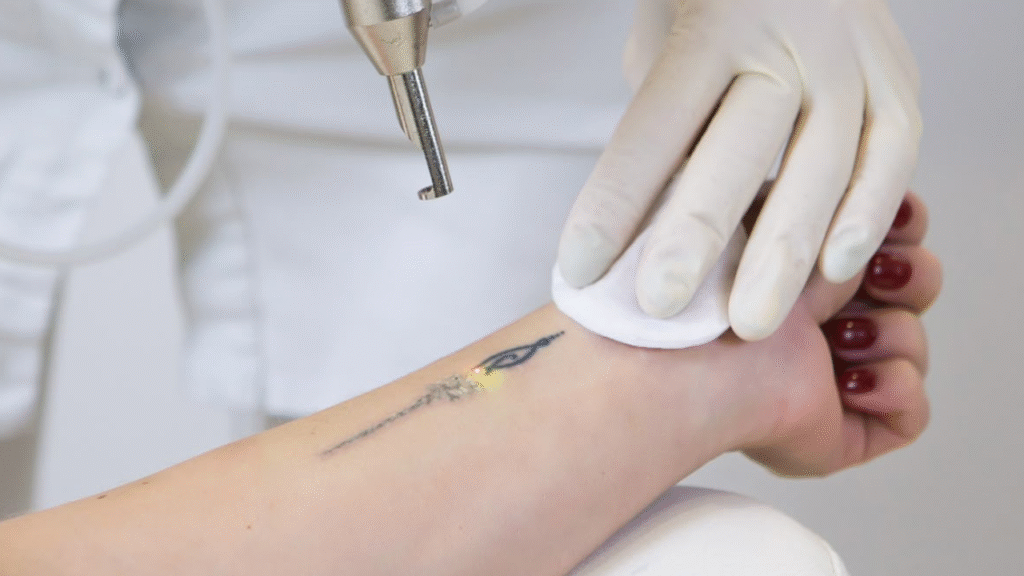
In recent years, the tattoo industry has seen a rapid rise in popularity, with millions of people getting inked as a form of self-expression. However, not everyone loves their tattoos forever. Over time, some individuals regret their choices or want to update or remove tattoos that no longer suit their style or life stage. This is where laser tattoo removal comes in as a modern and effective solution.
As the demand for tattoo removal services continues to grow, so does the need for qualified laser tattoo removal technicians. If you’re interested in breaking into this high-demand field, enrolling in a laser tattoo removal course for beginners can open doors to an exciting and rewarding career. In this blog, we’ll explore everything you need to know about starting your journey to becoming a laser tattoo removal technician, including what the role involves, the essential training, and how to launch your career
What Is Laser Tattoo Removal?
Laser tattoo removal is a non-invasive procedure that uses high-intensity laser light to target and break down tattoo pigment in the skin. The laser works by emitting light pulses that break the ink particles into smaller fragments, which are then gradually eliminated by the body’s natural processes. This is the most advanced and effective method available for tattoo removal, offering minimal scarring and relatively quick healing times.
Laser tattoo removal is preferred over other methods because it’s highly precise, can target specific areas without affecting surrounding skin, and provides long-term results.
How does the Laser work ?
The laser used in tattoo removal produces energy at specific wavelengths that target the ink in the tattoo. Different tattoo colors absorb different wavelengths, so specific lasers are used for various ink colors. For example, black ink absorbs a wide range of wavelengths, making it easier to treat, while lighter ink colors like yellow or green may require specific lasers.
The treatment works by breaking the pigment down into small particles, which are naturally flushed out by the body’s immune system.
Why Laser Tattoo Removal?
Laser tattoo removal is the leading method for removing tattoos for several reasons:
- Precision: Laser technology targets the pigment of the tattoo without damaging surrounding tissue, ensuring the treatment area is treated with great accuracy.
- Fewer Side Effects: Compared to other methods such as surgical excision or dermabrasion, laser tattoo removal has fewer side effects and is less invasive.
- Long-Term Results: Laser treatment provides permanent results for most individuals, with the removal of tattoos often being fully achieved after several sessions.
- Minimal Downtime: While there is some swelling and redness immediately after treatment, the recovery time is short compared to other removal methods.
What Does a Laser Tattoo Removal Technician Do?
As a laser tattoo removal technician, your primary responsibility is to safely and effectively remove tattoos using laser technology. However, the role involves more than just operating a machine. It requires strong technical knowledge, consultation skills, and the ability to manage client expectations. Here’s an overview of the key duties involved:
- Consultation and Skin Assessment:
The first step in the process is assessing whether a client is suitable for laser tattoo removal. This includes evaluating the tattoo’s size, color, and location, as well as checking the client’s overall skin health and medical history. - Patch Testing:
Before starting the actual treatment, a patch test is performed to ensure the client’s skin responds well to the laser. This helps to prevent any allergic reactions or complications. - Laser Treatment:
The technician uses a specialized laser device to target the tattoo’s pigment. Depending on the size and depth of the tattoo, multiple sessions may be required to fully remove the ink. - Aftercare Advice:
After the treatment, the technician provides aftercare advice, which typically includes instructions on avoiding sun exposure, not picking at the skin, and moisturizing the treated area. - Ongoing Record Keeping:
Maintaining accurate records of each client’s treatment is crucial. This includes tracking the number of sessions, progress, and any changes in the client’s skin reaction.
Why Consider a Career as a Laser Tattoo Removal Technician?
With the increasing popularity of tattoos, there’s been a corresponding rise in the demand for tattoo removal services. Laser tattoo removal has become one of the most sought-after aesthetic treatments, creating a strong commercial opportunity for trained technicians. Here’s why you should consider this career path:
- Growing Demand: More and more individuals are seeking tattoo removal for personal, professional, or aesthetic reasons. This has created a booming market for laser tattoo removal.
- High Earnings Potential: Laser tattoo removal is considered a premium service, often priced higher than other beauty treatments. As a skilled technician, you can earn a significant income, especially if you build a solid client base.
- Diverse Work Options: You can work in various settings, including clinics, beauty salons, dermatology offices, or even start your own business.
- Job Satisfaction: Many technicians find satisfaction in helping clients remove tattoos that no longer suit them, offering a positive change and contributing to clients’ self-confidence.
The Laser Tattoo Removal Training Process
Before you can start working as a laser tattoo removal technician, you must undergo specialized training. A laser tattoo removal course for beginners typically includes a combination of theoretical learning and practical, hands-on experience. Here’s what you can expect from a high-quality training program:
- Laser Theory and Technology:
Understanding the science behind laser technology is essential. You’ll learn about how different lasers work, the various wavelengths used, and how lasers target different tattoo pigments. - Tattoo Anatomy and Ink Types:
Not all tattoos are created equal. Different ink colors and types require different approaches. You’ll need to understand the anatomy of tattoos and how various inks absorb laser light. - Client Consultation and Assessment:
One of the most important aspects of the job is conducting thorough consultations with clients. You’ll need to assess their skin type, medical history, and tattoo characteristics to create a tailored treatment plan. - Health and Safety Protocols:
Ensuring that treatments are carried out safely is paramount. You’ll learn about the importance of hygiene, eye protection, laser safety protocols, and equipment handling. - Practical Training:
Hands-on training is essential for building confidence and proficiency. You’ll practice using the laser equipment under supervision, ensuring that you can confidently deliver treatment and handle various skin types and tattoo colors. - Aftercare and Client Communication:
Learning how to guide clients through the aftercare process is essential to avoid complications and promote healing. You’ll also practice managing client expectations and providing ongoing support. - Record Keeping and Documentation:
Maintaining accurate treatment records and following proper documentation practices is critical for safety, legal compliance, and tracking client progress.
Do You Need Previous Experience?
The good news for beginners is that prior experience in beauty therapy is not necessarily required. Many laser tattoo removal courses are designed for beginners with no previous training in aesthetics. However, those with a background in beauty therapy or skin treatments may find it easier to understand the fundamental concepts.
Ultimately, the most important factor is the quality of the training program. Look for accredited courses that offer comprehensive training, hands-on experience, and a recognized certification.
Building Confidence with Practical Experience
Confidence is key when performing laser tattoo removal treatments. In a clinical setting, clients will often look to the technician for reassurance, so it’s essential to be calm, methodical, and knowledgeable.
Practical training allows you to build this confidence. As you practice using the laser, you’ll learn to manage different tattoo types and sizes, adjust the settings accordingly, and observe the client’s skin response throughout the treatment. The more hands-on experience you gain, the more confident you’ll become in your skills.
Career Paths in Laser Tattoo Removal
After completing your training, several career paths are available:
- Work in a Clinic or Salon: This is the most structured route. It allows you to gain experience while working in a supportive environment.
- Expand Your Own Beauty Business: If you already own a beauty salon or skincare clinic, adding laser tattoo removal to your menu of services can attract a wider client base and increase your earnings.
- Independent Practice: Some technicians choose to specialize in laser tattoo removal and run their own business, offering treatments in a dedicated facility.
- Expand into Other Aesthetic Services: Laser tattoo removal can be a stepping stone to other advanced aesthetic treatments, such as laser hair removal or skin rejuvenation.
Final Thoughts
Becoming a laser tattoo removal technician offers an exciting opportunity to enter a growing and rewarding field. With the right training and a professional mindset, you can launch a successful career in the beauty and aesthetics industry. Whether you choose to work in a clinic, expand your beauty business, or run your own independent practice, laser tattoo removal offers both personal fulfillment and commercial potential.
You May Also Like
Laser Tattoo Removal Course
FAQ
What qualifications do I need to become a laser tattoo removal technician?
Most courses require no prior experience, but a background in beauty therapy or aesthetics can be helpful. The essential qualification is completing a recognized laser tattoo removal course.
How long does a laser tattoo removal course take?
Courses can range from a few days to several weeks, depending on the level of training and the number of practical hours included.
Do I need any special equipment to get started?
Yes, to work as a laser tattoo removal technician, you’ll need access to professional-grade laser equipment. Some salons or clinics provide this equipment, but if you plan to work independently, you’ll need to invest in your own.
Is laser tattoo removal safe?
Yes, laser tattoo removal is safe when performed by a trained and certified professional. It is non-invasive and has minimal side effects, though some swelling or redness is common immediately after treatment.
Can I start my own laser tattoo removal business?
Yes, many technicians choose to start their own independent business after completing their training. Starting your own business can be lucrative but requires significant investment and business acumen.